
Learning From Frontline Workers Without Interrupting Their Work
WORKDAY INTERCEPT SURVEY
Designed for 21M+ workers across Retail, Hospitality, and Transportation.
Role
Team
2 Product Managers | 2 Developers | Content Designer | Legal
timeline
2 Weeks
Learning From Frontline Workers for the First Time
This initiative gave Workday direct access to feedback from frontline workers using the app every day across Retail, Hospitality, and Healthcare.
Why I Was Brought In
The initial direction was already established. I was brought in to evaluate the proposed direction.
Review the proposed direction
Challenge assumptions shaping product direction
Identify potential gaps
Impact
15,213 Responses Across Retail, Hospitality, and Healthcare
10% completion rate Over one quarter
42% Above SaaS Average 7% survey participation benchmark
Visibility Wasn’t Enough
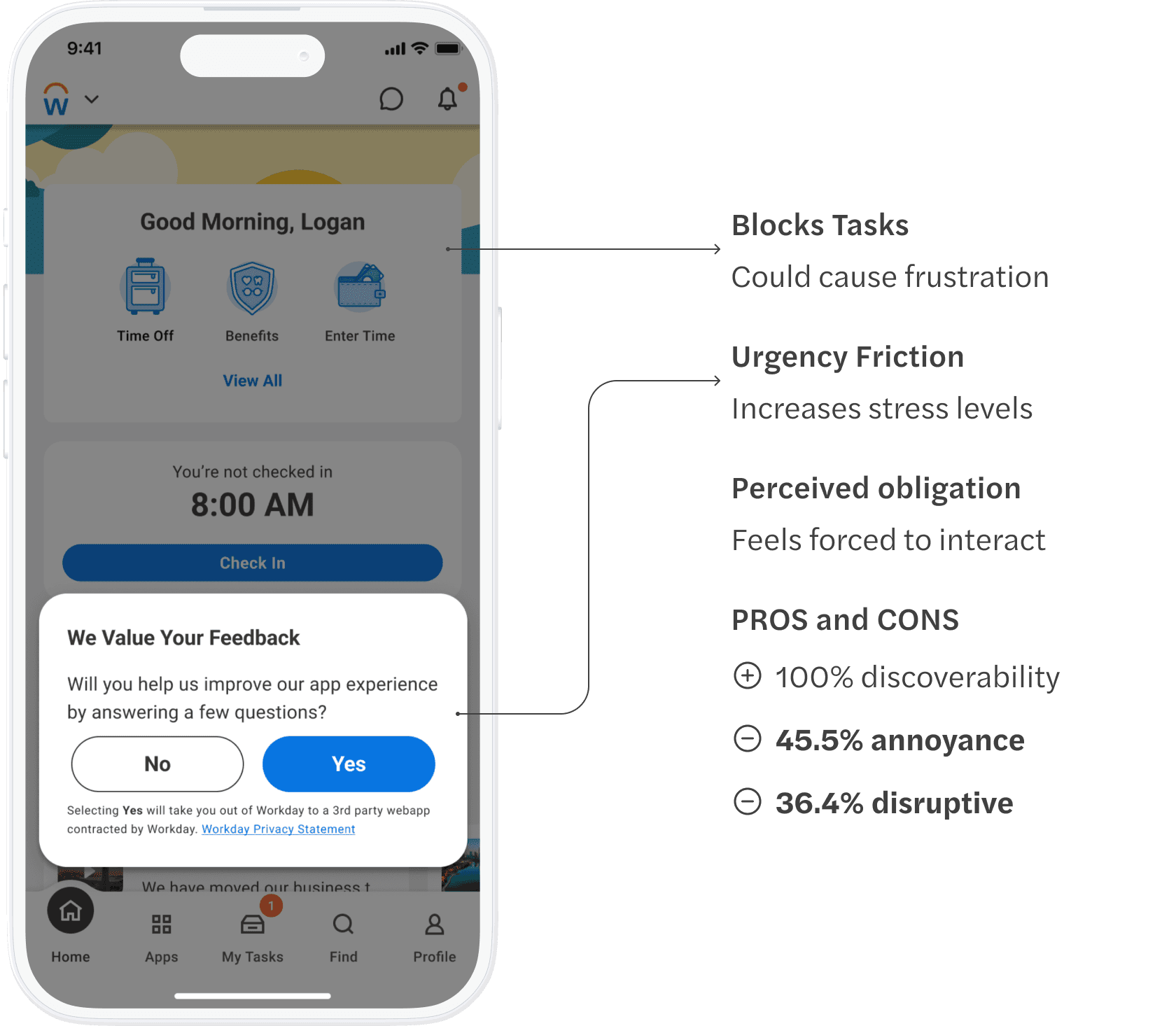
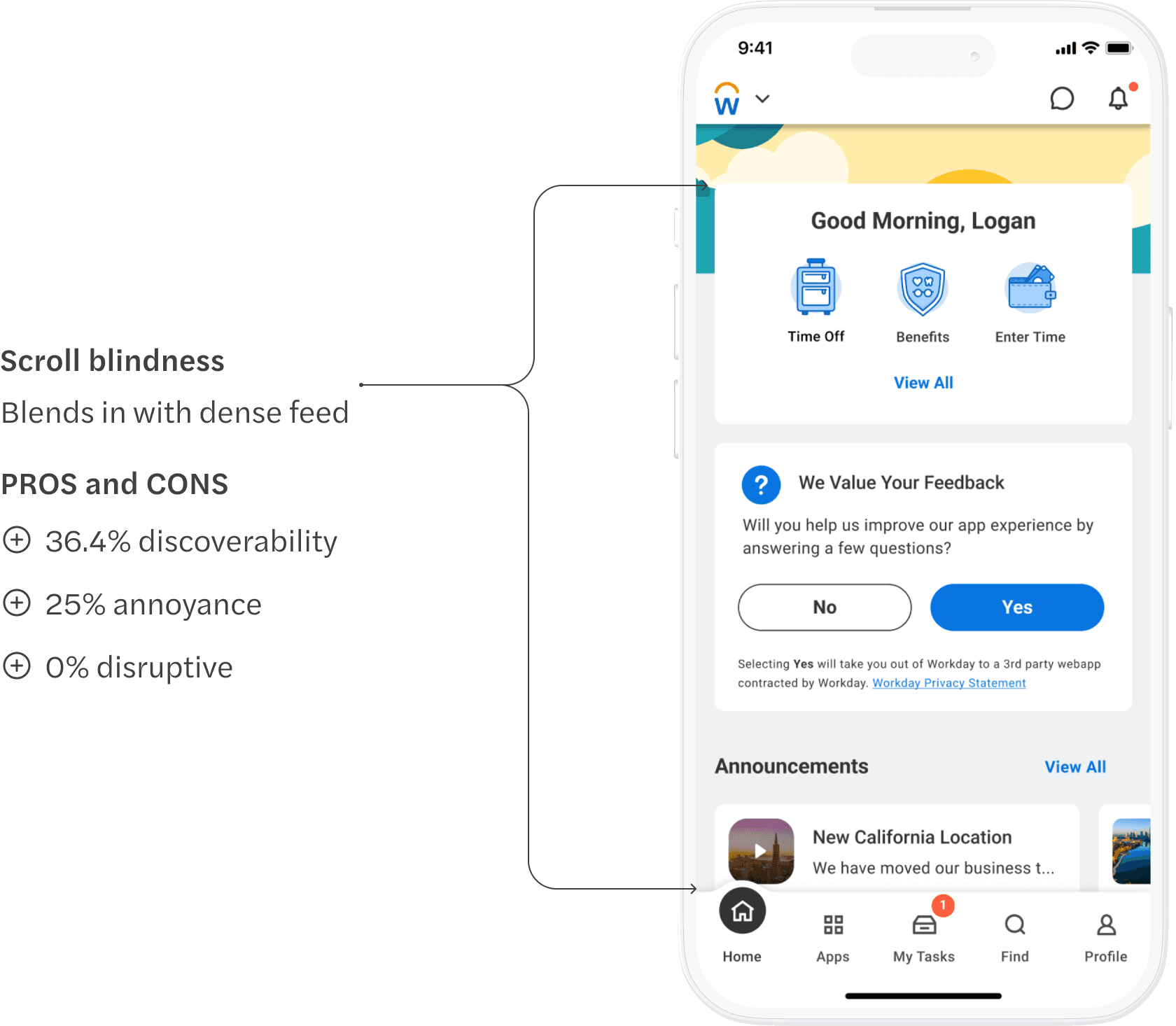
Three interaction directions were tested to understand discoverability, annoyance, and disruption after login. The research measured visibility but didn’t account for how workers use the app.
pop-up
in-feed
Easy to Overlook
Banner
Always Present

What the Test Didn’t Measure
The team that ran the test recommended the pop-up because of its 100% visibility, but didn’t account for how workers might respond when interrupted during time-sensitive tasks. For example, someone opening the app to clock in would likely dismiss the survey to complete the intended task.
Visibility Alone Doesn’t Create Participation
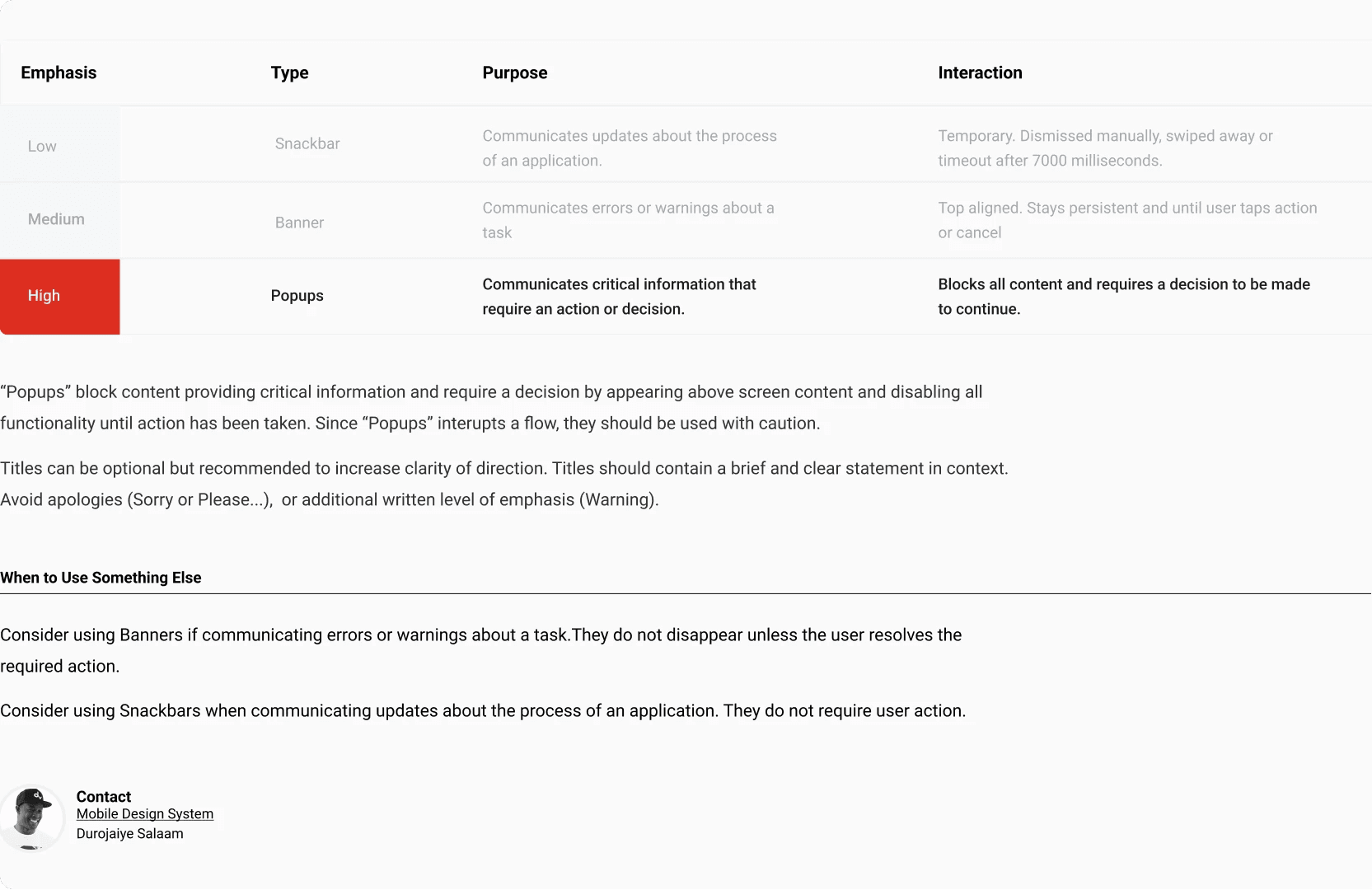
Completing the survey was important for the business to gather feedback, but it didn’t have the same importance for workers. Supporting my recommendation for a different direction involved presenting the pop-up guidelines I authored, which reserved pop-ups for situations requiring immediate attention or action, making the proposed direction inconsistent with those principles.
Getting Feedback on Workers’ Terms
The final direction met the visibility need without forcing workers to interact with the survey before completing their intended task. Aligning with worker behavior resulted in 15,213 responses over one quarter, exceeding the SaaS engagement benchmark by 42%.