
First Republic
Corporate banking represented 55% of bank deposits, totaling $49B
Role
Experience Designer
Team
2 Product Designers | 2 Product Managers | 2 Engineering Agencies | Project Manager
timeline
10 quarters
Improve Adoption and Client Satisfaction
Corporate banking had not been updated for years. Multiple vendors and patterns created an inconsistent experience, making banking tasks harder than necessary and affecting client trust.
More Than A Redesign
Craft a cohesive mobile banking experience.
Prioritize the most important banking workflows
Identify opportunities for new functionality
Impact
15% Increase in Mobile Adoption
The Problem Went Beyond Visuals
The mobile experience looked dated, but appearance wasn’t the issue. Clients often had to take multiple steps before reaching the information they wanted. Multiple out-of-the-box vendor tools created an inconsistent experience, and a legacy backend required screen scraping to enable improvements.


Starting Too Soon
After an initial conversation with the PM, I started iterating on ideas but quickly realized there were no agreed-upon priorities or requirements. I brought my concerns to my Design Director and VP, who asked for my recommendation on how to create alignment. I proposed a workshop with the PM to define requirements and another with bankers to vote on client needs to establish priorities.
We Needed Direction Before Design
To establish direction, I facilitated a workshop with the PM and intern on writing user stories to define project requirements.
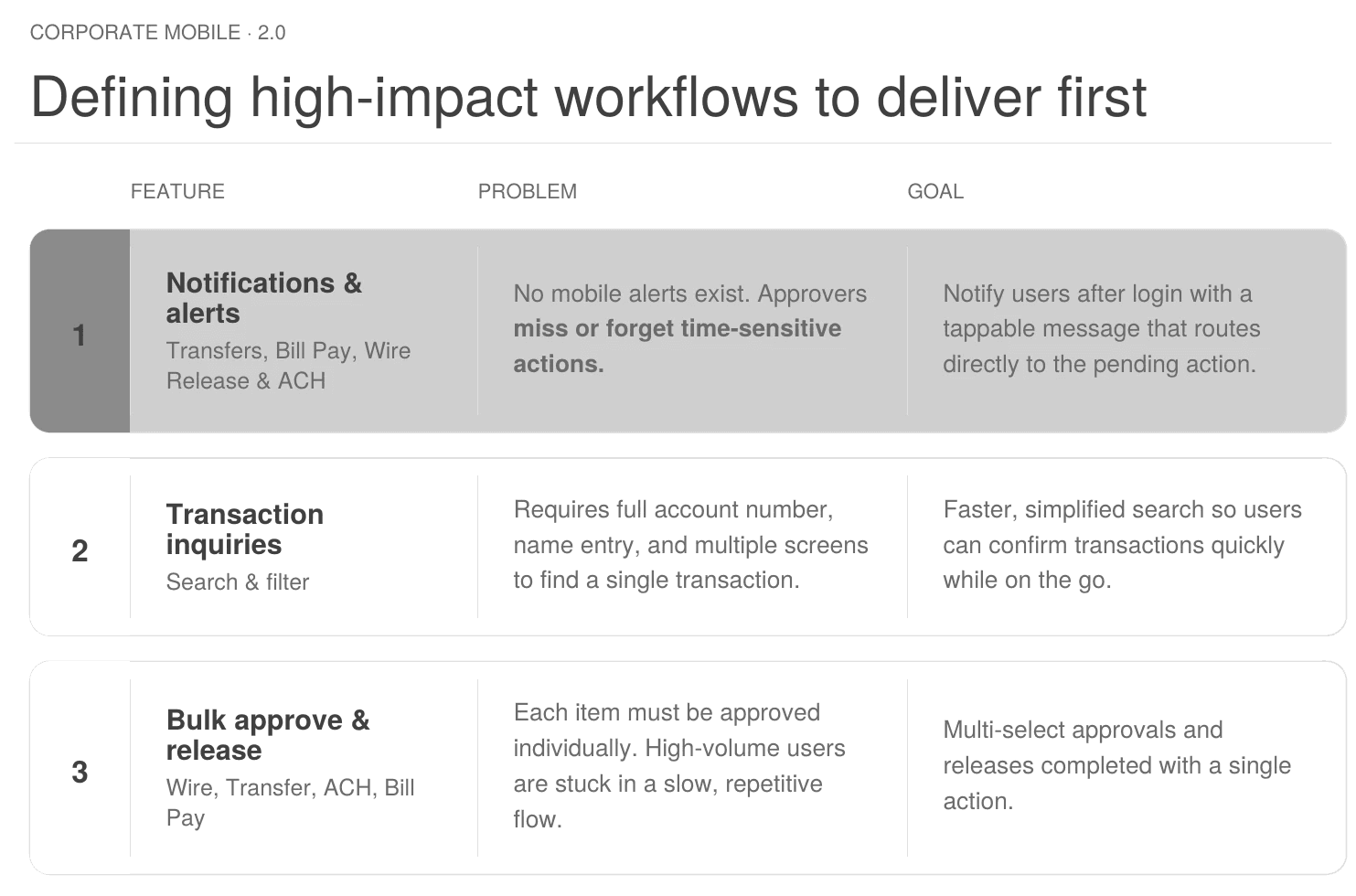
I then facilitated a second workshop with bankers who worked directly with clients every day. Along with reviewing the current experience, I introduced new functionality for discussion, allowing bankers to identify the highest-impact workflows to deliver first.
A Simpler Banking Experience
With a clear direction established, new functionality introduced, and a simplified experience, the redesign delivered a modernized banking experience, contributing to a 15% year-over-year increase in mobile adoption.